


Tri-Domain Was Called Impossible. The Papers That “Prove” It Actually Prove NanoBase™ Right.
Every so often someone points at NanoBase™, cites a paper, and says a tri-domain carrier cannot exist. They are usually holding a real citation. Here is the part they miss: the papers are correct, and not one of them is about NanoBase™. Read them properly and they describe exactly why the architecture works.
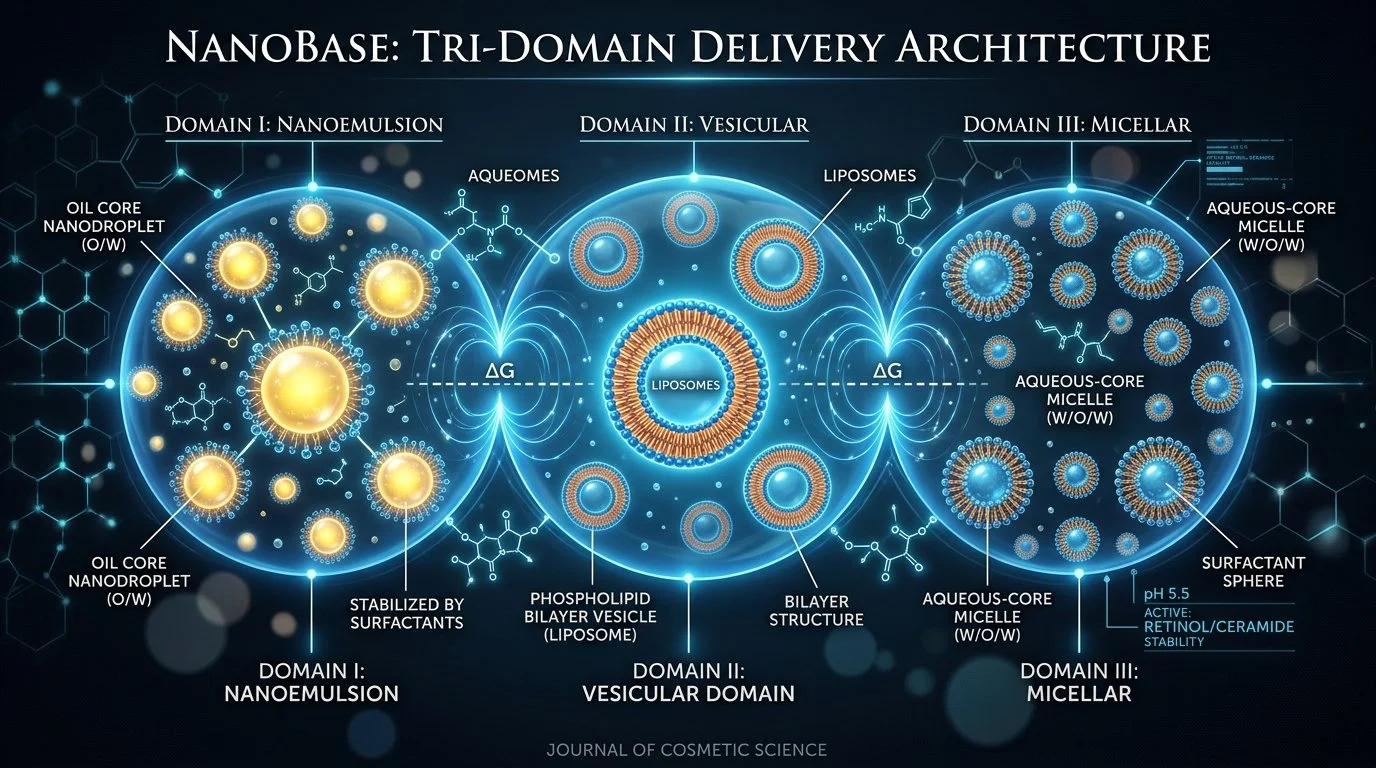
The Emulsion They Said Couldn’t Exist: Inside the Tri-Domain Architecture of NanoBase™
In 1949, William Griffin published the Hydrophilic-Lipophilic Balance. Seventy-five years later, HLB still runs most of the cosmetic category — and it still does not account for surface charge, colloidal energy barriers, particle size, Ostwald ripening, or multi-carrier specificity. NanoBase™ was built to close those five gaps, simultaneously, on a single lecithin chassis.
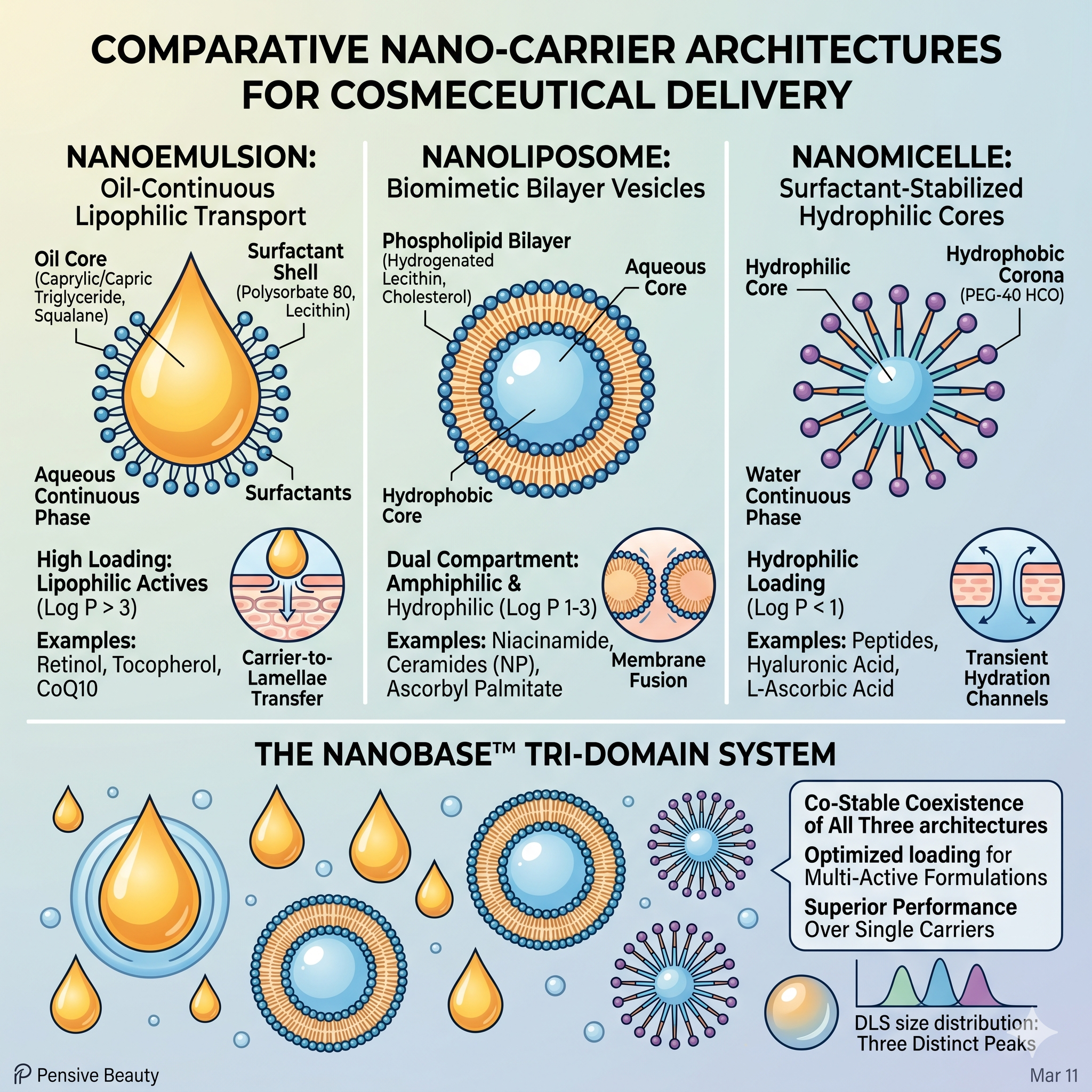
Nanoemulsion vs Nanoliposome vs Nanomicelle: Comparing Carrier Architectures for Cosmeceutical Delivery
Head-to-head technical comparison of three dominant nano-carrier architectures for cosmeceutical delivery: nanoemulsions (40 to 200 nm droplets), nanoliposomes (phospholipid bilayer vesicles), and nanomicelles (5 to 100 nm surfactant aggregates). Loading capacity, stability, stratum corneum penetration pathways, and why NanoBase™ tri-domain architecture from Pensive Beauty Labs outperforms single-class carriers.