

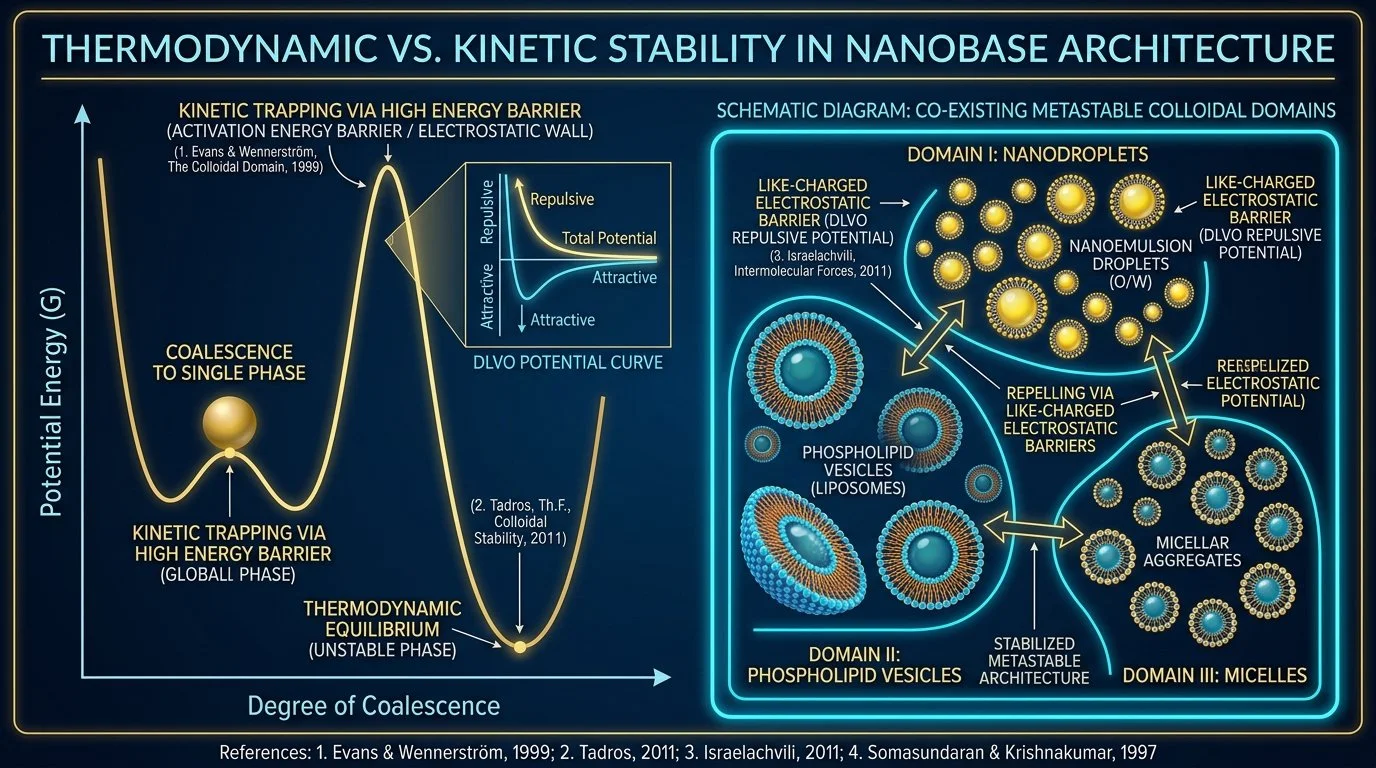
Tri-Domain Was Called Impossible. The Papers That “Prove” It Actually Prove NanoBase™ Right.
Every so often someone points at NanoBase™, cites a paper, and says a tri-domain carrier cannot exist. They are usually holding a real citation. Here is the part they miss: the papers are correct, and not one of them is about NanoBase™. Read them properly and they describe exactly why the architecture works.
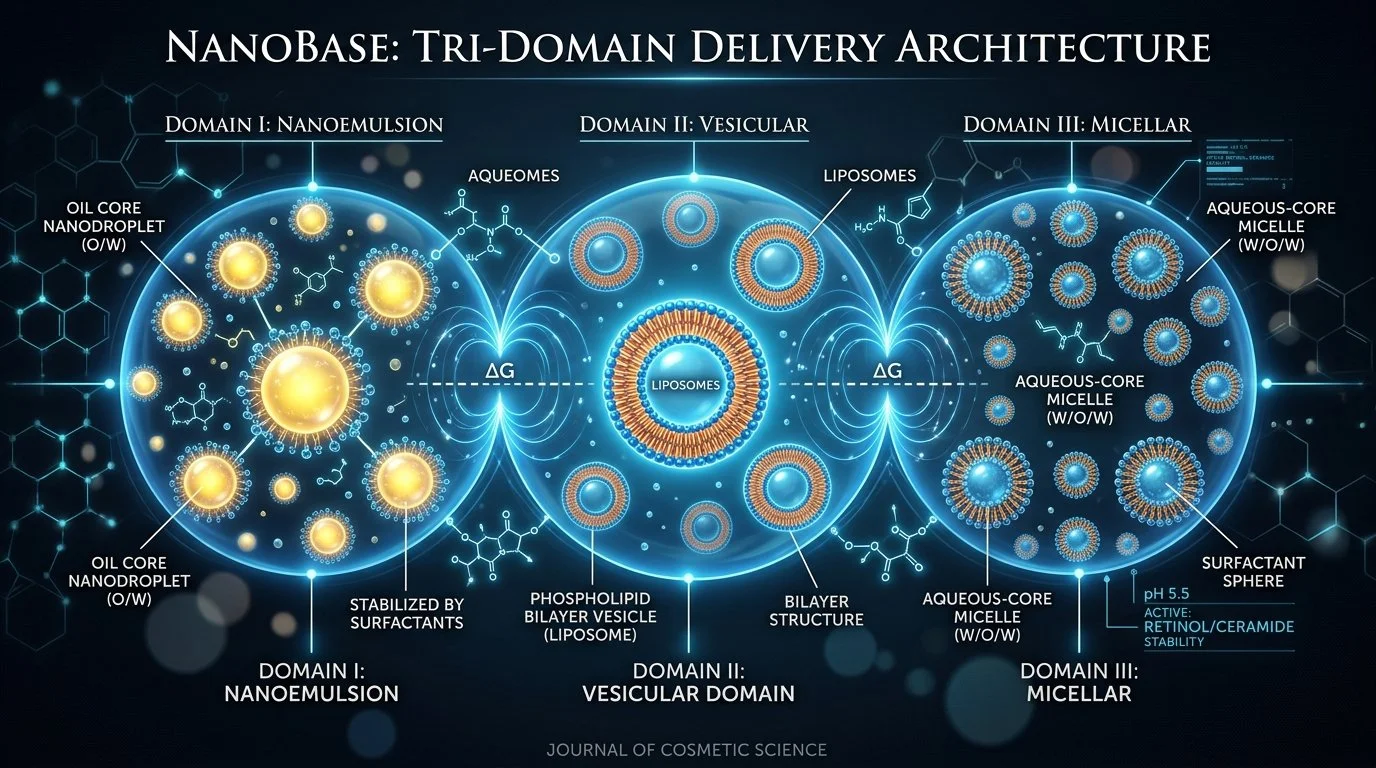
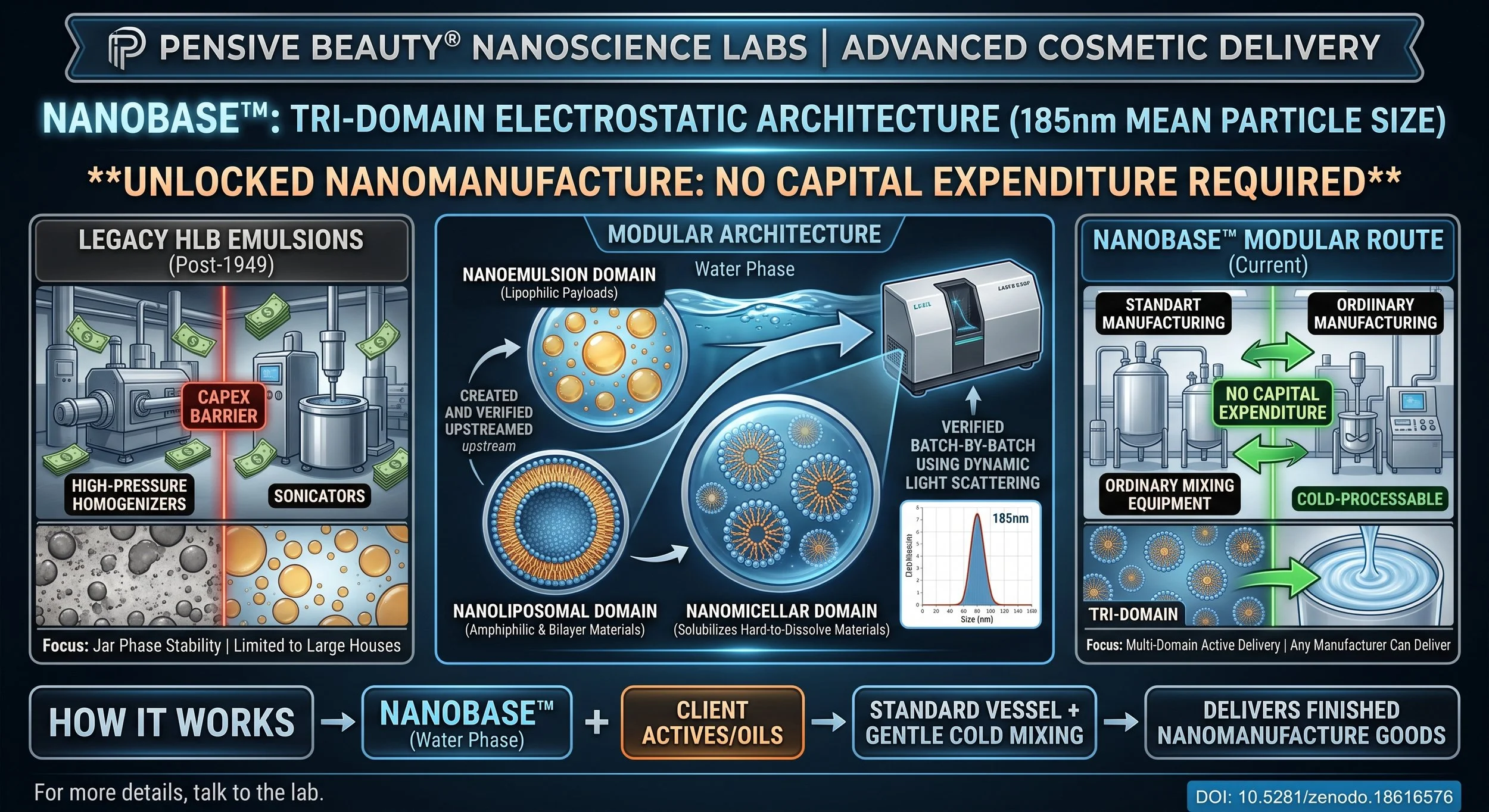
The Emulsion They Said Couldn’t Exist: Inside the Tri-Domain Architecture of NanoBase™
In 1949, William Griffin published the Hydrophilic-Lipophilic Balance. Seventy-five years later, HLB still runs most of the cosmetic category — and it still does not account for surface charge, colloidal energy barriers, particle size, Ostwald ripening, or multi-carrier specificity. NanoBase™ was built to close those five gaps, simultaneously, on a single lecithin chassis.
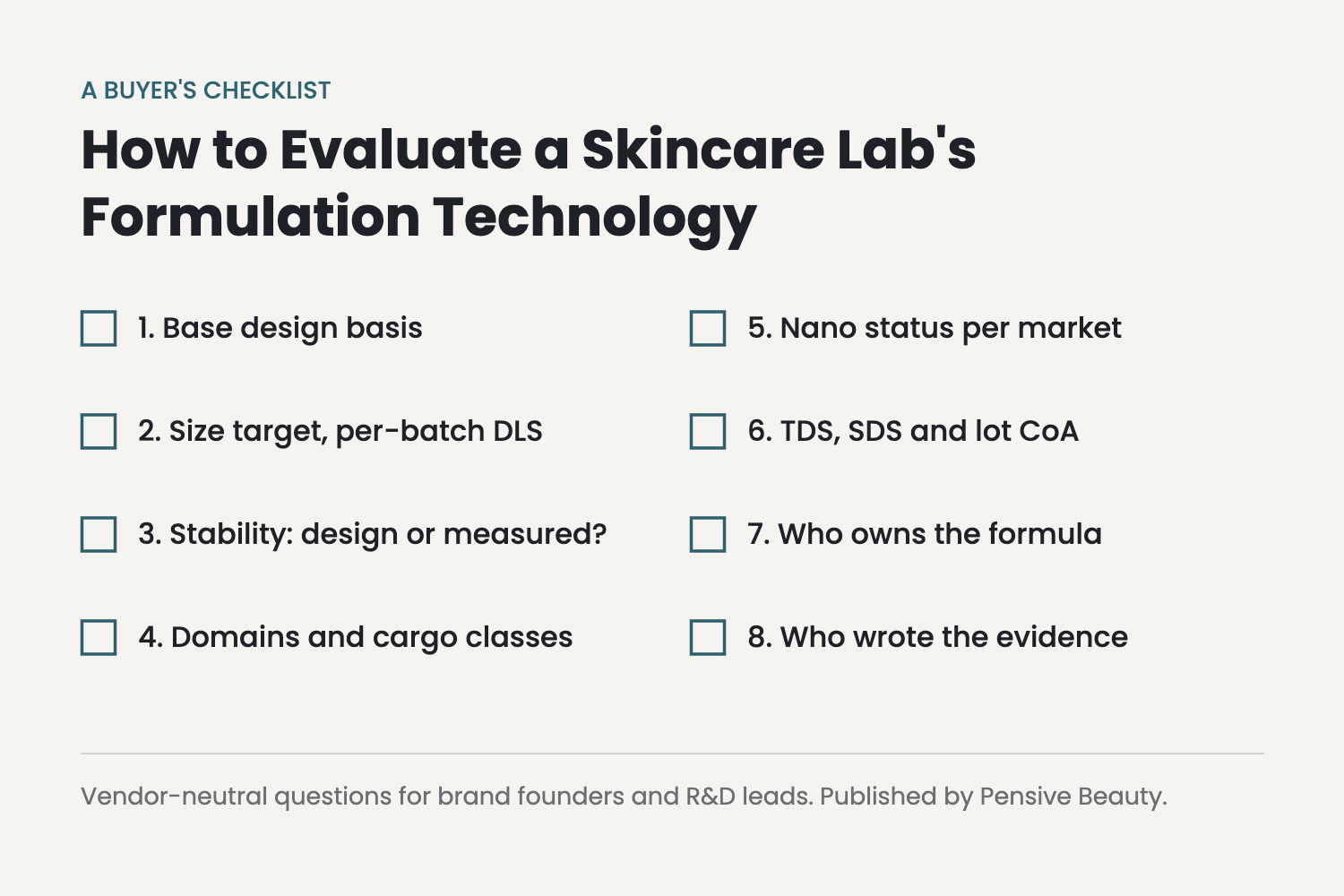
How to Evaluate a Skincare Lab’s Formulation Technology
A vendor-neutral checklist for brand founders and R&D leads: eight questions to ask any skincare lab about carrier design, size data, stability, IP and who wrote the evidence. Published by Pensive Beauty, which makes NanoBase™; our own answers are disclosed at the end.

Why Your Skin Stops Responding: Product Fatigue Explained
Skincare plateaus are often not the fault of your actives. They can reflect a formula that decays over its shelf life. The science of product fatigue.

The 500-Dalton Rule: Molecular Size and the Stratum Corneum
The 500-Dalton rule from the dermatology literature, what molecular size means at the stratum corneum, and what cosmetic vehicle design can and cannot change.

NanoBase™ Rx: The Pharmacy Compounding Industry's Full Replacement for HLB Chemistry
NanoBase™ Rx is a pharmacy compounding excipient that combines a tri-domain nano-colloidal Architecture with a lyotropic liquid crystal matrix. Engineered at Pensive Beauty Labs. The three engineered nano-domains (lipophilic, hydrophilic, interfacial bridging) are designed to be organized within a biomimetic lamellar and bicontinuous cubic liquid crystal phase structure that matches the native liquid crystalline lamellar organization of stratum corneum intercellular lipids. Lamellar and cubic phase organization is a design target pending small angle scattering confirmation. Excipient only. No API supplied.
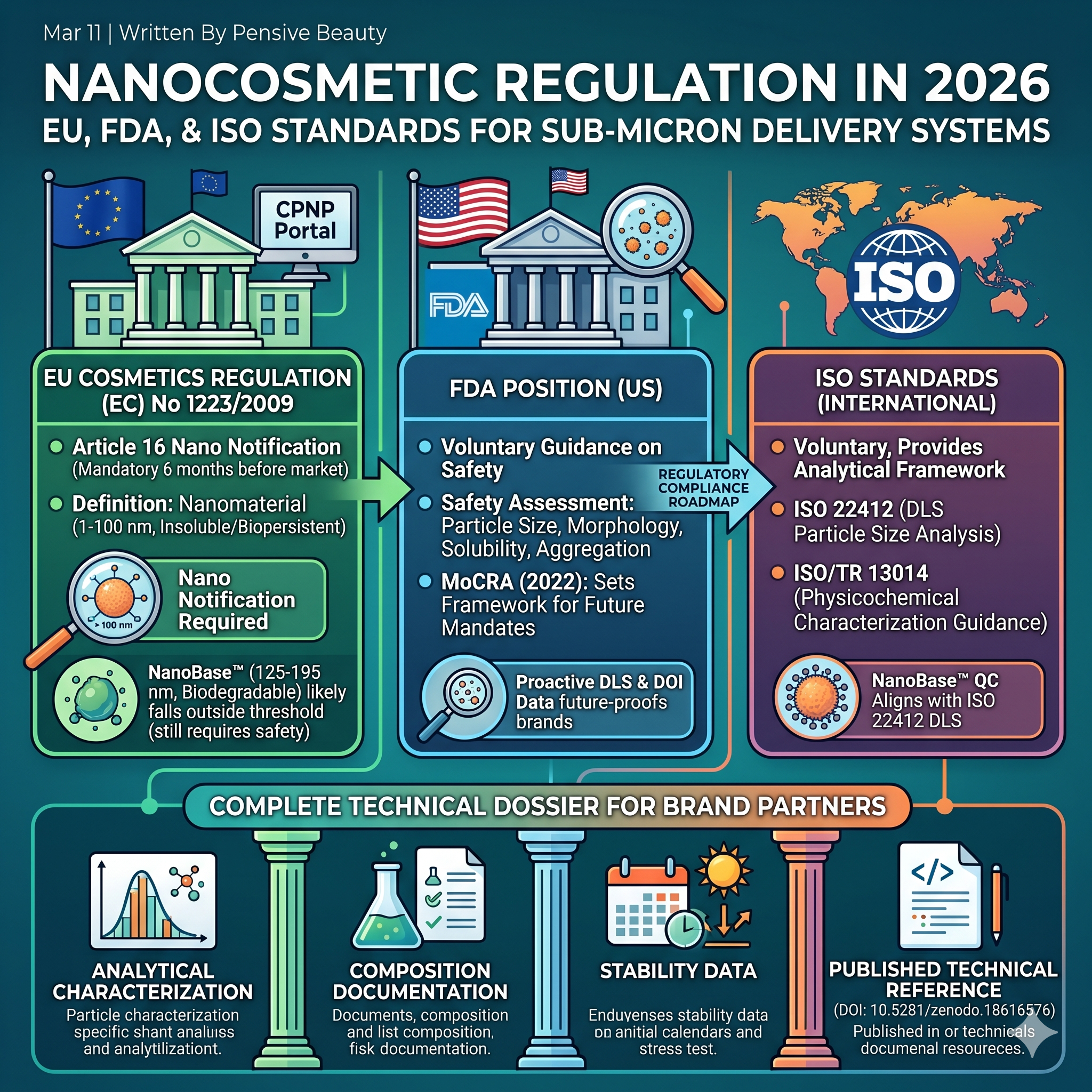
Nanocosmetic Regulation in 2026: EU, FDA, and ISO Standards for Sub-Micron Delivery Systems
Regulatory framework for sub-micron cosmetic formulas in 2026. EU Cosmetics Regulation 1223/2009 nano notification, FDA voluntary nano guidance, and ISO 29701 and 80004 standards relevant to brands building on NanoBase™, the tri-domain nano-colloidal Architecture engineered by Pensive Beauty® Nanoscience Labs.
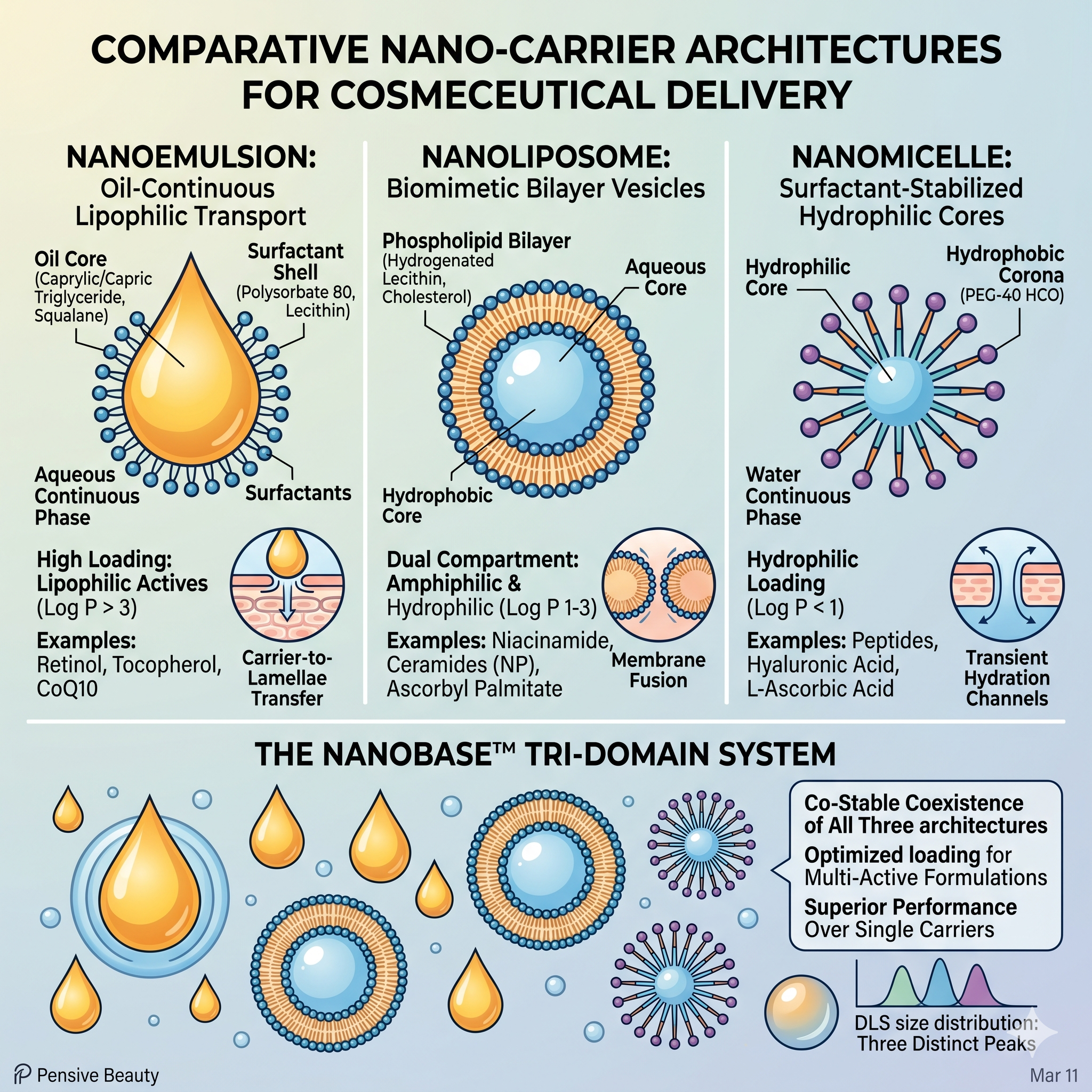
Nanoemulsion vs Nanoliposome vs Nanomicelle: Comparing Carrier Architectures for Cosmeceutical Delivery
Head-to-head technical comparison of three dominant nano-carrier architectures for cosmeceutical delivery: nanoemulsions (40 to 200 nm droplets), nanoliposomes (phospholipid bilayer vesicles), and nanomicelles (5 to 100 nm surfactant aggregates). Loading capacity, stability, stratum corneum penetration pathways, and why NanoBase™ tri-domain architecture from Pensive Beauty Labs outperforms single-class carriers.


How to Start a Skincare Line: A Complete Guide for 2026
Learn how to start a skincare line in 2026 with NanoBase™, the tri-domain nano-colloidal Architecture. Step-by-step guide covering formulation, branding, regulatory compliance, and manufacturing partnerships.
The Complete Guide to Private Label Skincare Manufacturing
Complete guide to private label skincare built on the NanoBase™ tri-domain nano-colloidal Architecture. Learn how to launch your own branded product line with advanced tri-domain formulation architecture.
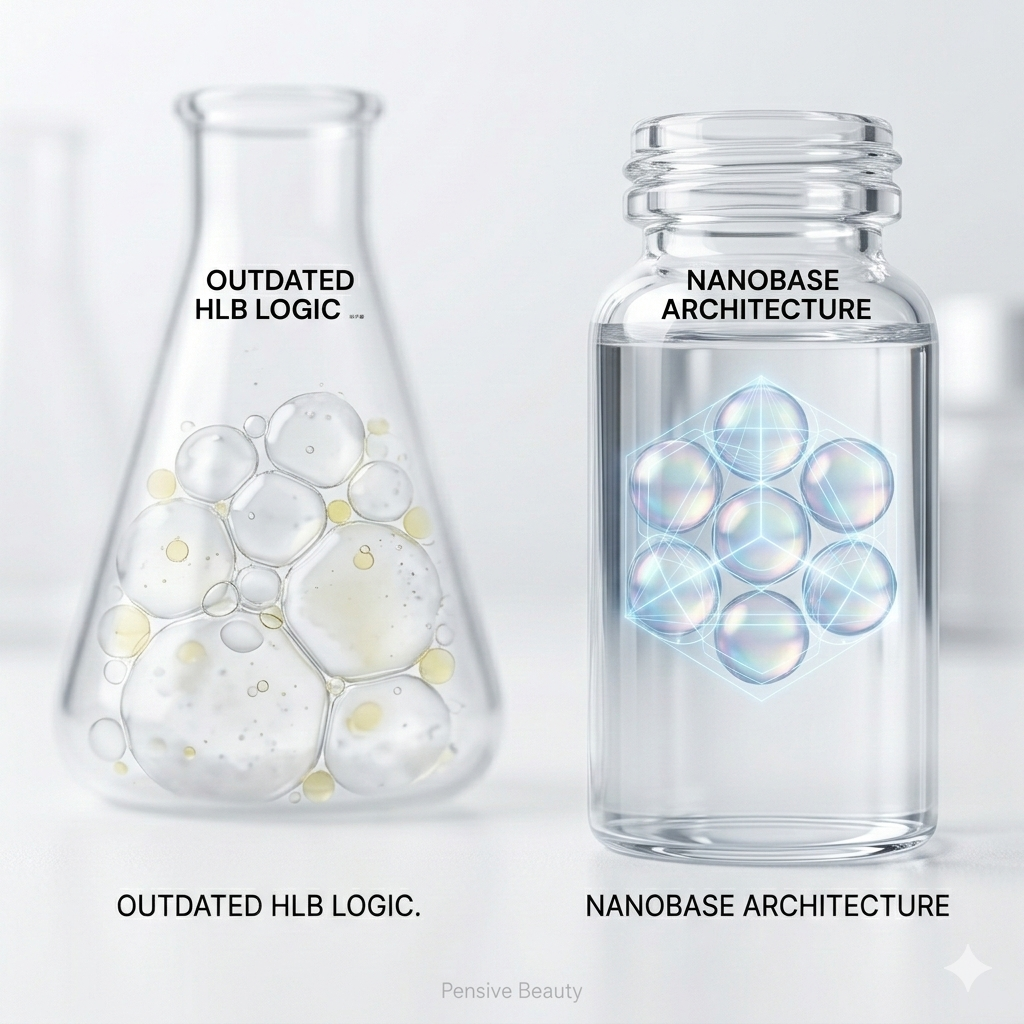
Custom Skincare Formulation Services: Build Your Brand with Nano-Precision Technology
Explore custom skincare formulation services built on the NanoBase™ tri-domain nano-colloidal Architecture. From concept to finished product, advanced molecular engineering for next-generation topical formulas.
Nanotechnology in Skincare: The Future of Precision Beauty
How nanotechnology is transforming skincare formulation. Deep dive into NanoBase™ tri-domain architecture, nano-emulsion stability, and how nano-scale formulation differs from traditional HLB emulsion systems.
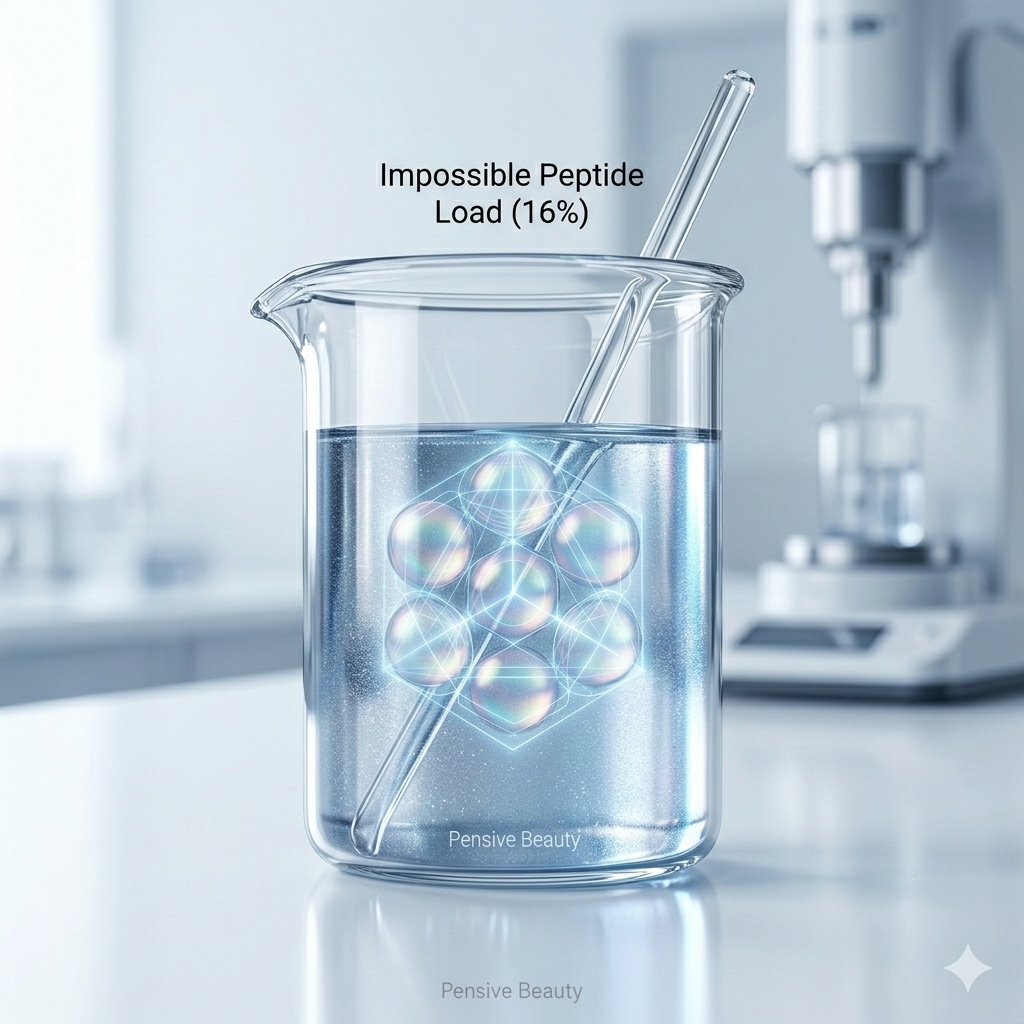
The Complete Guide to Peptide Skincare Formulation: Overcoming Delivery Barriers
Complete guide to peptide skincare formulation and nano-scale formulation design. Covers signal peptides, copper peptides, matrikines, and how the NanoBase™ tri-domain nano-colloidal Architecture is designed to host peptides in one formula.
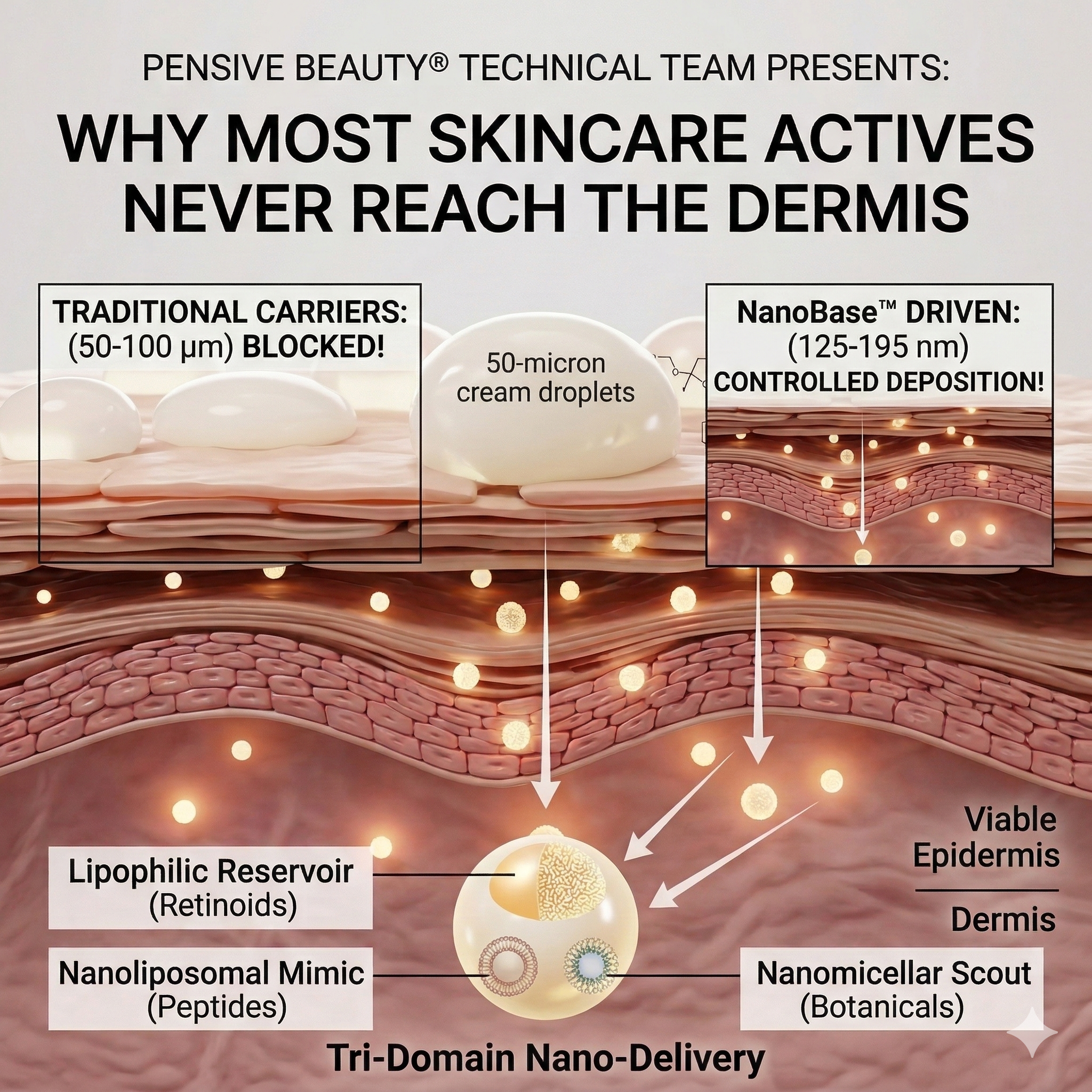
Why Most Skincare Actives Never Reach the Dermis
Conventional emulsions produce 1-100 µm carriers against a stratum corneum barrier with 10-50 nm intercellular spacing. NanoBase™, a tri-domain nano-colloidal Architecture engineered to a ~185 nm design target and DLS-characterised every batch, is designed to address all three HLB barriers at the formulation level.

The Architecture Era: Why Advanced Skincare Is No Longer About Ingredients
For decades, skincare innovation has been defined by ingredients. Retinol. Peptides. Growth factors. Exosomes. Each new molecule promised to be the breakthrough. But the real bottleneck was never the active list. It was the chassis carrying it.
In 2026, advanced skincare is no longer determined only by what’s inside the bottle. It’s shaped by the architecture that organizes and protects those actives in the formula. Without structural intelligence, even the most sophisticated molecules are forced to operate inside legacy systems built on outdated emulsion logic.
The next era of performance is not about stacking more ingredients. It’s about engineering the foundation first.
This is the architecture era.

Where Can You Get Assistance Developing Advanced Cosmetic Formulations?
Advanced cosmetic formulation isn’t about adding more actives, it’s about engineering the formula architecture. Pensive Beauty replaces 1950s-era HLB emulsions with NanoBase™, a globally accessible tri-domain nano-colloidal Architecture, supported by stability science, particle size characterisation, and hands-on lab development.